Employers ResourcesReading time: 13 Minutes
How Much Does Labour Hire Cost in Brisbane?
Labour hire can help Brisbane businesses respond to changing workforce demand without taking on the full burden of direct employment. This guide explains how labour hire works, what affects cost, how quickly workers can be supplied, and when this model is the right fit.

Written byYoungbrook Team
Published Date
Introduction
Hiring in Brisbane has become more time-sensitive and less predictable. Even when there is demand for workers, securing reliable staff quickly is not always straightforward.
Labour hire has become a common solution for businesses that need to respond to changing workload without taking on the full responsibility of direct employment. It provides access to workers who can step into operational environments while the employment, payroll and compliance structure sits externally.
For many employers, the challenge is not understanding what labour hire is. It is understanding how it actually works in practice, what it costs, and how quickly it can deliver results.
Why Employers Are Turning to Labour Hire
Workforce demand rarely stays consistent. Projects ramp up, workloads fluctuate, and internal teams are not always structured to absorb that pressure.
In these situations, labour hire gives businesses a way to scale their workforce without increasing internal complexity. Workers can be brought in as needed, with a clear framework around compliance, safety and ongoing management.
This guide breaks down how labour hire works in Brisbane, what influences cost, and what you can realistically expect when engaging a provider.
How Labour Hire Works in Brisbane
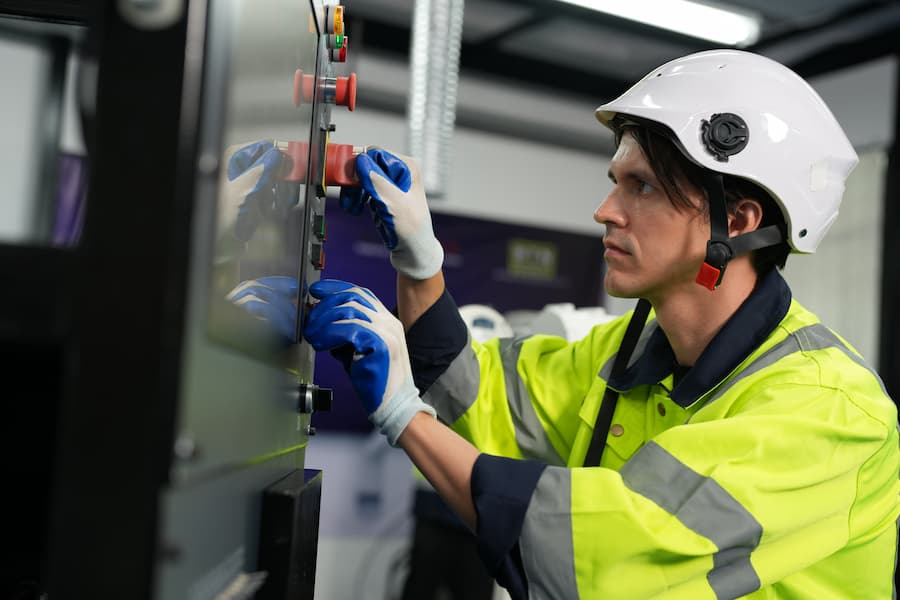
Labour hire is a structured workforce model where workers are employed by a provider and supplied to your business to perform work under your direction.
From a day-to-day perspective, those workers operate as part of your team. They follow your processes, work on your site and contribute to your output. The difference sits behind the scenes.
The labour hire provider remains responsible for employment. This includes payroll, superannuation, insurance, workplace health and safety, and compliance with Fair Work obligations. Your business gains access to workers without taking on the administrative and legal burden that comes with direct employment.
This structure is widely used across Brisbane in industries where workforce demand needs to scale without increasing internal risk. It allows businesses to maintain operational continuity while keeping employment responsibilities clearly defined.
For a breakdown of how this model is delivered in practice, see our labour hire services.

When Businesses Use Labour Hire in Brisbane
Labour hire is rarely the starting point. Most businesses move toward it when internal hiring or workforce planning no longer keeps pace with operational demand.
In Brisbane, this often happens in environments where output needs to remain consistent, even as workload fluctuates or staffing gaps appear. Labour hire provides a way to stabilise operations without committing to long-term employment structures that may not suit the situation.
Responding to Workload Spikes
Short-term increases in demand are one of the most common triggers.
This might come from seasonal peaks, unexpected contract wins or periods where production requirements increase beyond normal capacity. Internal teams are often not sized to absorb these spikes without impacting performance or safety.
Labour hire allows businesses to bring in additional workers quickly, maintain output, and then scale back once demand returns to normal levels.
Supporting Project-Based Work
Project environments require a different approach to workforce planning.
Whether it is a construction project, a warehouse rollout or a short-term operational upgrade, the workforce is tied to a defined timeframe. Hiring permanent employees for this type of work often creates unnecessary complexity once the project is complete.
Labour hire provides access to workers for the duration of the project, with a clear start and end point that aligns with operational needs.
Replacing Absent or Departing Staff
Unplanned absences and staff turnover can disrupt operations quickly.
When key workers are unavailable, the impact is rarely isolated to one role. It often creates pressure across the wider team, affecting productivity and timelines.
Labour hire helps bridge that gap. Workers can step into the role while a permanent solution is being arranged, keeping operations moving without overloading internal staff.
Scaling Without Increasing Internal Headcount
For many businesses, the decision to use labour hire is not just about filling roles. It is about managing workforce structure more strategically.
As operations grow, directly employing every additional worker can increase administrative burden, compliance exposure and long-term cost commitments. This is particularly relevant in industries with fluctuating demand or strict safety requirements.
Labour hire allows businesses to scale their workforce while keeping employment risk and administrative complexity controlled. It creates a more flexible operating model that can adapt as demand changes.
This approach is widely used across sectors such as supply chain and logistics, where workforce flexibility and reliability are essential to maintaining consistent service delivery. It is equally relevant in environments like healthcare, where continuity and compliance are critical to day-to-day operations.

How Much Labour Hire Costs in Brisbane
Cost is one of the first questions employers ask when considering labour hire. It is also one of the hardest to answer without context.
Unlike fixed services, labour hire pricing is built around the role, the environment and the conditions under which the work is performed. Two roles that look similar on paper can sit in very different cost ranges once factors like skill level, site requirements and urgency are taken into account.
Understanding how pricing works, and what drives it, gives you a clearer view of what to expect before engaging a provider. It also helps employers assess whether labour hire or temporary staffing is the more practical fit for the situation.
How Labour Hire Pricing Is Structured
Labour hire is typically charged as an hourly rate, often referred to as the charge rate.
This is not the same as the worker’s pay rate. The charge rate is a combined figure that covers both the worker’s wages and the full employment structure behind them.
In most cases, this includes superannuation, payroll tax, workers compensation insurance, leave entitlements where applicable, and the administrative and compliance costs involved in employing and managing the worker.
It also reflects the provider’s responsibility for recruitment, onboarding and ongoing workforce management. The employment relationship sits with the provider, not your business, and the pricing reflects that shift in responsibility.
For employers, this means the cost is not just for the hours worked. It is for a fully managed and compliant workforce arrangement that removes the need to handle payroll, insurance and employment obligations internally.
What Impacts Labour Hire Costs
Labour hire costs in Brisbane can vary significantly depending on the specifics of the role and the conditions around it.
One of the biggest factors is the type of role being filled. General labour positions typically sit at a different level compared to licensed roles such as forklift operators or skilled trades, where qualifications and experience directly influence cost.
Skill level also plays a role. Workers who can operate independently, understand site processes and contribute from day one are generally more valuable than entry-level candidates who require supervision and training.
Shift timing can affect cost as well. Afternoon, night and weekend shifts often attract higher rates due to award conditions and penalties.
Urgency is another factor that is often underestimated. Roles that need to be filled immediately can require a faster sourcing process, which can influence overall cost depending on availability in the market.
The length of the assignment also matters. Short-term placements, particularly those with uncertain duration, are structured differently to longer-term engagements where workforce planning can be more stable.
Site conditions can also influence pricing. Environments with strict safety requirements, detailed onboarding processes or complex operating conditions require workers who are prepared to step in and perform within those constraints.
All of these factors combine to shape the final cost, which is why labour hire pricing is always tied to the specifics of the role rather than a standard rate.
Why Costs Vary Between Labour Hire Companies
Not all labour hire providers operate at the same standard, and this is often reflected in pricing.
One of the key differences sits in compliance. Licensed providers in Queensland are required to meet strict obligations, including proper payroll practices, insurance coverage and adherence to workplace laws. Providers who cut corners in these areas may appear cheaper, but they can expose your business to risk.
Worker quality is another factor. The process used to source, assess and prepare workers has a direct impact on how they perform once on site. Reliable workers who understand the role and can integrate quickly tend to come from more structured recruitment processes.
Ongoing management also plays a role. Some providers remain actively involved throughout the placement, supporting both the worker and the client to maintain performance and continuity. Others take a more hands-off approach after placement, which can affect outcomes over time.
Reliability is often the result of all these elements working together. When workers are properly engaged, supported and managed, the overall workforce performs more consistently. That consistency has a direct impact on productivity, safety and operational stability.
For employers, the difference in cost between providers is rarely just about price. It reflects how the workforce is structured, supported and maintained once it is in place. For a closer comparison between workforce models, see our guide on labour hire vs temporary staffing.

How Fast You Can Get Labour Hire Staff in Brisbane
Speed is one of the main reasons businesses turn to labour hire. When workforce gaps start affecting output, delays in hiring can quickly create pressure across the wider operation.
That said, labour hire is not instant in every case. Some roles can be filled quickly, while others take longer because the requirements are tighter, the site is more complex, or the available candidate pool is smaller.
The most accurate answer is that timeframes depend on the type of role, how clearly it is defined, and how quickly decisions are made once suitable workers are identified.
Typical Timeframes for Different Roles
General labour roles can often be filled faster than more specialised positions.
Where the work is straightforward, the site is ready, and the expectations are clear from the beginning, businesses can usually access workers far more quickly than they could through a standard direct hiring process.
Skilled roles tend to take longer. This is especially true where licences, technical capability or industry-specific experience are essential to performing the work safely and productively from day one.
The difference is not just about availability. It is also about suitability. A worker may be available immediately, but that does not mean they are the right fit for the role, the site or the pace of the environment.
What Slows Down Hiring
One of the biggest causes of delay is unclear role requirements.
When the scope of the role is vague, or the expectations shift once recruitment has already started, it becomes harder to assess candidates properly and move with confidence. Time is lost not because workers do not exist, but because the target keeps moving.
Site onboarding can also slow things down. Some businesses require inductions, documentation, checks or multiple approval steps before a worker can start. These are often necessary, but they still affect lead time.
Safety requirements are another key factor. In higher-risk environments, the standard for placement is naturally stricter. Workers may need specific tickets, prior site experience or a stronger understanding of compliance before they can be deployed.
All of this means that the hiring timeline is shaped as much by the readiness of the business as it is by the availability of the worker.
How to Speed Up the Process
The fastest placements usually happen when the brief is clear from the outset.
That means defining the tasks, the required experience, the shift pattern and any site-specific conditions before recruitment begins. A clear job scope reduces hesitation and makes it easier to identify the right people quickly.
Flexibility also helps. Businesses that stay open-minded on minor preferences often move faster than those looking for an exact match on every detail, particularly when the role still requires reliability, safety and baseline competence above all else.
Fast decision-making matters just as much. When suitable workers are presented, delays in feedback or approval can cause the process to slow unnecessarily. Good candidates do not remain available indefinitely, especially when demand is active across the market.
A more structured hiring process usually leads to faster outcomes overall. For a broader look at how preparation affects hiring speed, see our recruitment methodology page.

Labour Hire vs Hiring Direct Employees
The choice between labour hire and direct employment usually comes down to structure, responsibility and how stable your workforce needs are over time.
Direct employment gives your business more long-term control over the employment relationship. It can make sense when the role is ongoing, the workload is consistent and the position is closely tied to team culture or long-term capability building.
Labour hire offers a different advantage. It gives businesses access to workers without taking on the full administrative and legal burden of employment. That can be valuable when demand is fluctuating, timeframes are tight or the role needs to be filled without expanding internal headcount.
Cost vs Control
Hiring direct can appear more straightforward on paper because the pay structure is easier to see internally.
In practice, the full cost is broader than wages alone. Recruitment time, onboarding, payroll administration, insurance, leave exposure and replacement risk all sit with the employer.
Labour hire shifts much of that structure externally. While the hourly rate may look different, it includes the employment framework behind the worker as well as the flexibility to scale up or down when needed.
Risk vs Responsibility
With direct employment, responsibility stays with the business.
That includes payroll, superannuation, insurance, workplace obligations and the broader management of the employment relationship. For some businesses, that level of control is appropriate. For others, it adds pressure at a time when operations are already stretched.
Labour hire changes that balance. The worker still contributes on your site and under your direction, but the employment responsibility sits with the provider. This can reduce internal burden and create a more controlled way to respond to short-term workforce pressure.
Flexibility
Flexibility is often where the difference becomes most obvious.
Direct employment is better suited to roles that are stable, ongoing and central to the long-term shape of the business. When the role is temporary, uncertain or tied to changing workload, that structure can become harder to justify.
Labour hire is often the more practical option when workforce demand needs to adjust quickly. Where the need is longer term and the goal is to secure someone permanently, our permanent recruitment services may be the better fit.

Common Mistakes When Using Labour Hire
Labour hire can work extremely well when the role is clear, the site is prepared and expectations are aligned from the beginning. Problems usually arise when the model is used reactively without enough structure around it.
Many of the issues businesses experience with labour hire are not caused by the workforce model itself. They come from rushed decisions, unclear communication or a mismatch between what the role requires and how the placement is managed once the worker arrives.
Choosing Based on Price Alone
Cost matters, but it should never be the only decision point.
A cheaper rate can look attractive at first, especially when there is immediate pressure to get someone on site. The problem is that lower pricing can sometimes reflect weaker screening, lower support or poor compliance standards behind the placement.
That risk becomes more obvious in technical environments such as trades and engineering, where capability, safety and site readiness have a direct impact on output.
Unclear Expectations
Labour hire placements are far more effective when the brief is properly defined.
If the role is vague, the tasks are not clearly explained or the standard expected on site is left open to interpretation, even a capable worker can struggle to perform as intended. Delays, frustration and poor fit often begin with a brief that was never specific enough in the first place.
Clear expectations around duties, pace, reporting lines and site conditions make it much easier to place someone who can contribute with minimal disruption.
Poor Onboarding
Even experienced workers need a proper introduction to the site.
When onboarding is rushed or inconsistent, workers are more likely to miss important safety procedures, reporting processes or practical details that affect performance. This can create avoidable setbacks within the first shift or two.
The issue is not always the worker. In many cases, the site simply was not ready to receive them in a way that supported a smooth start.
Slow Communication
Communication gaps can quickly reduce the effectiveness of any placement.
If concerns about performance, attendance or fit are not raised early, small issues can become larger operational problems. The same applies when feedback on candidates is delayed during the hiring stage, particularly when workforce demand is active and suitable people are moving quickly.
Where the requirement is more project-based or tied to a defined period of work, contract staffing solutions may be a better fit. That decision becomes easier when communication is clear from the outset and the workforce model matches the nature of the role.

When Labour Hire May Not Be the Right Fit
Labour hire is effective in many operational environments, but it is not the right answer for every role.
Some positions require a different kind of hiring approach because the value of the role sits less in immediate workforce coverage and more in long-term capability, specialist expertise or close alignment with the internal business.
Long-Term Strategic Roles
Roles that shape the direction of a team or function are often better handled through a more permanent hiring process.
Where the position carries long-term responsibility, leadership influence or ongoing accountability, businesses usually benefit from a model built around stability rather than short-term flexibility. In these cases, the goal is not simply to fill a gap. It is to secure someone who will grow with the role and the business over time.
Highly Specialised Hires
Some roles are too specialised to be approached through a standard labour hire model.
This can apply where technical expertise is niche, the candidate pool is limited or the role requires a very specific combination of experience, judgement and sector knowledge. In those situations, speed matters less than precision.
A more targeted search process is often better suited to roles where the wrong hire would create a much larger operational or commercial cost.
Culture-Critical Positions
There are also roles where cultural fit carries as much weight as technical capability.
When a person needs to work closely with leadership, influence team dynamics or represent the business in a more embedded way, the hiring process usually needs more depth than labour hire is designed to provide. The focus shifts from short-term workforce support to long-term alignment.
That does not reduce the value of labour hire. It simply reinforces that workforce models should match the nature of the role.
As a recruitment and labour hire agency, we can help businesses choose a hiring approach that fits the role, the timeframe and the level of responsibility involved.

How to Get an Accurate Labour Hire Estimate
Getting an accurate labour hire estimate starts with clarity. The more defined the requirement is from the beginning, the easier it is to assess the likely cost, timeframe and workforce model needed to support it.
The difficulty with labour hire pricing is that small differences in the brief can materially change the estimate. A role may sound straightforward at first, but the actual cost can shift once factors such as licences, shift pattern, site conditions, supervision level and urgency are taken into account.
Why Estimates Vary
Labour hire estimates are not based on the job title alone.
Two businesses may both need a warehouse worker, but the underlying requirements can be very different. One role may involve standard picking and packing on a day shift, while another may require forklift tickets, cold room exposure, weekend availability or a faster start date. Those differences affect both sourcing and pricing.
The estimate also depends on how long the placement is expected to run. A short-term assignment with limited notice is often scoped differently to a longer placement where there is more stability around hours, duties and workforce planning.
What Helps Produce a More Accurate Estimate
The fastest way to improve accuracy is to scope the role properly before requesting labour hire.
That usually means confirming the core duties, the site location, the shift hours, the expected duration, any licences or checks required, and whether the worker needs to operate independently from day one. It also helps to be clear about the working environment, particularly where safety procedures or onboarding requirements are more involved.
When those details are defined early, it becomes much easier to assess the likely cost and recommend the most suitable hiring model. In some cases, Contract Staffing may be the more appropriate option [LINK]. In others, a more flexible brief may be better supported through Unbundled Hiring Solutions [LINK].
Why Quick Scoping Leads to Better Decisions
A brief scoping discussion often saves more time than it adds.
Instead of working from assumptions, it allows the hiring requirement to be understood in context. That leads to a more realistic estimate, a clearer hiring path and fewer surprises once recruitment begins.
For employers, that matters just as much as the price itself. A good estimate is not just about knowing what the role may cost. It is about knowing what will be required to fill it properly.

Final Thoughts: What to Expect When Using Labour Hire in Brisbane
Labour hire can be an effective way to respond to workforce pressure, but the outcome depends on more than speed alone.
The right result usually comes from having a clear brief, realistic expectations and a workforce model that suits the role. When those pieces are in place, labour hire can help businesses maintain output, reduce internal pressure and stay responsive as demand changes.
It is also important to recognise where labour hire fits, and where a different hiring approach may be more appropriate. That clarity makes decision-making easier and reduces the risk of choosing a model that creates more friction than it solves.
For employers in Brisbane, the value of labour hire is not simply that workers can be supplied. It is that the arrangement can be structured in a way that supports compliance, continuity and day-to-day operations.
About the Author

Youngbrook Team
Insights, advice, and industry updates from the Youngbrook Recruitment team, covering hiring, compliance, and workforce trends across Australia.
Need Labour Hire Support in Brisbane?
If you are planning ahead or need staff on site quickly, the first step is getting clear on what the role requires and which workforce model will deliver the best result.
We work with Brisbane businesses to assess hiring needs, clarify workforce requirements and support a more confident next step when labour hire is the right fit.
Related Resources

Manufacturing and Trades Recruitment in Brisbane: The Real Benefits
Brisbane's manufacturing and trades sector is competitive and the best workers are rarely looking. This guide covers the real benefits of working with a recruitment agency for your operations and for the people you are about to hire.
Youngbrook Team

Hiring Truck Drivers in Brisbane: What Employers Need to Know
Truck driver hiring in Brisbane is slower and more competitive than most logistics employers expect. This guide covers licence classes, what's driving the shortage, and how to structure your hiring process to secure licensed drivers before a competitor does.
Youngbrook Team

Why Admin Hiring in Brisbane Is Harder Than It Looks
Admin hiring in Brisbane is more competitive than most employers expect. This guide explains why good candidates are harder to find right now and what to do about it.
Youngbrook Team