Employers ResourcesReading time: 8 minutes
Forklift Licence Classes: LF vs LO for Employers
Queensland has two forklift licence classes and they do not cover each other. What LF and LO each authorise, and what to put on your next job order.
Written byYoungbrook Team
Published Date
Introduction
Most job orders that cross a recruiter’s desk say the same thing: forklift licence required. It is a reasonable shorthand and everyone knows roughly what it means. The problem is that Queensland has two forklift licence classes, they do not cover each other, and the line between them is not where most people would guess.
It is not about how high the forks go. It is not about the size of the machine or how narrow the aisles are. The question that separates LF from LO is whether the operator goes up with the load.
That distinction has practical consequences. Specify the wrong class and you get forklift operators who cannot legally operate your equipment, which you may not discover until someone is standing on your floor on day one. Specify a licence for equipment that does not need one and you have narrowed your applicant pool for no reason, in a market where licensed operators are already hard to find.
This guide covers what each class actually authorises, where the equipment names get confusing, and what to put on the job order so the people you interview can do the work.
LF and LO Are Separate Licences
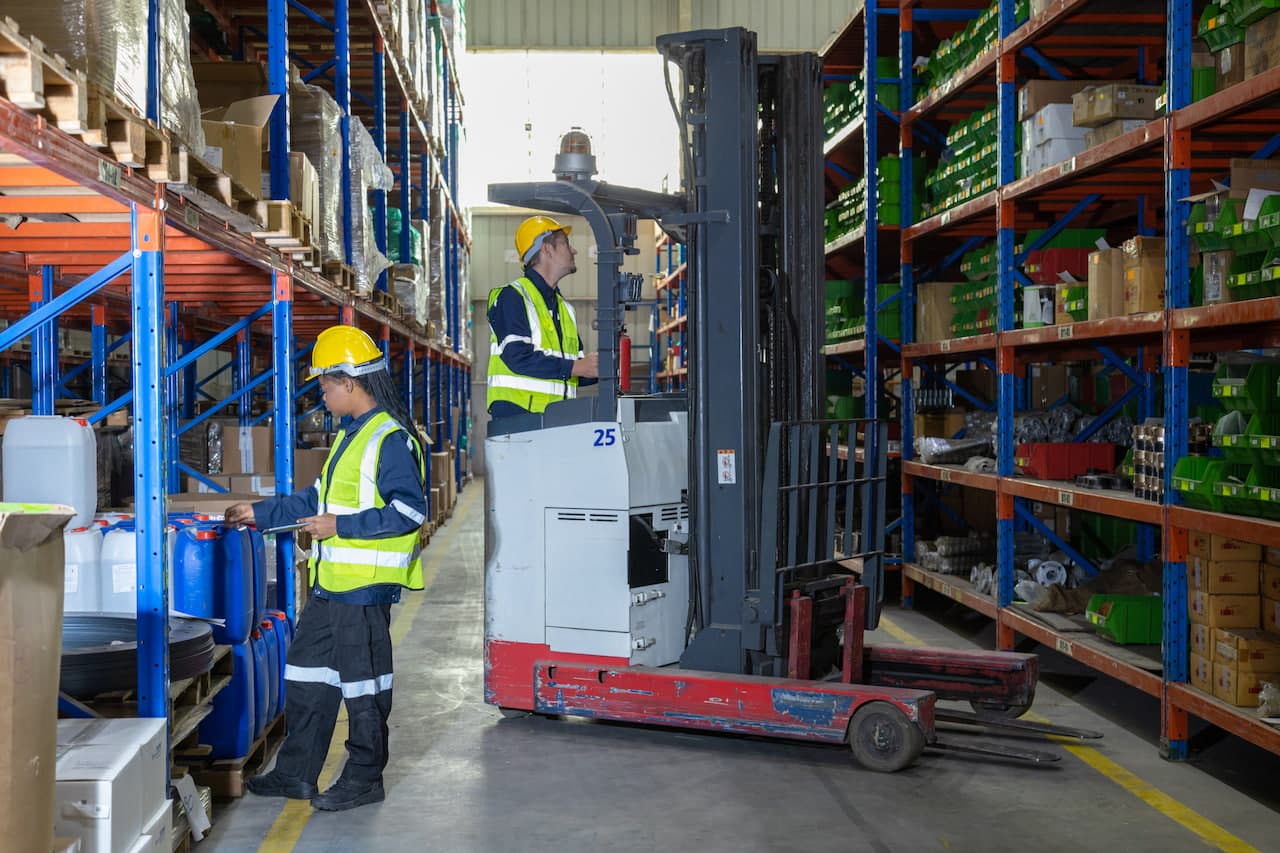
Queensland runs two classes of high risk work licence for forklift related work. Workplace Health and Safety Queensland issues both, they are recognised nationally, and each is valid for five years. They are separate licences, not tiers of the same one. Holding one does not imply anything about the other.
What LF Covers
LF is the standard forklift truck licence and the one most warehouse roles are asking for.
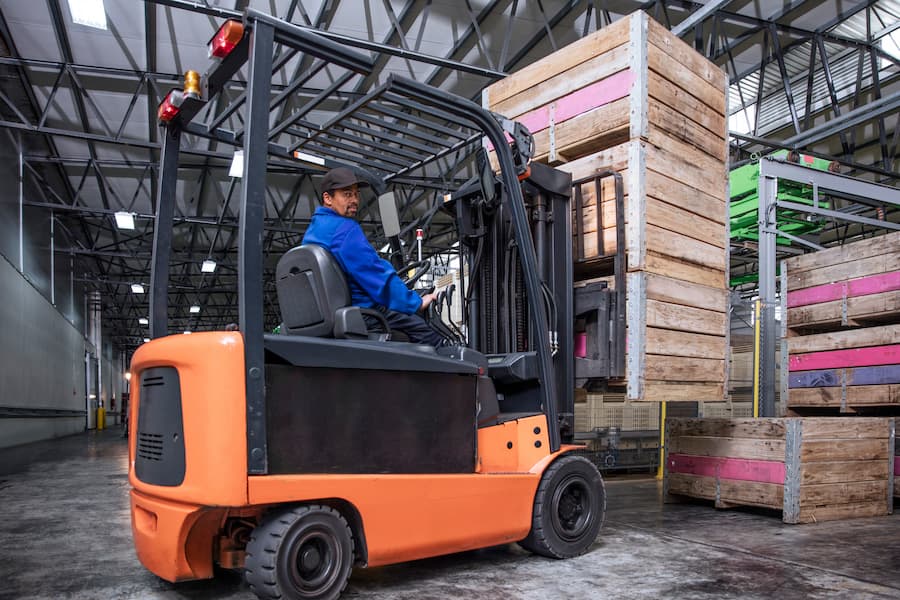
WHSQ defines a forklift truck as a powered industrial truck fitted with lifting media made up of a mast and an elevating load carriage, with a pair of fork arms or other arms attached that can be raised 900mm or more above the ground. Two exclusions sit inside that definition: pedestrian-operated trucks and pallet trucks are not forklift trucks for licensing purposes.
The practical shape of it is a machine the operator sits in, at ground level, while the mast lifts the load in front of them. The operator does not move vertically. Whatever the forks are doing, the seat stays where it is.
That covers the bulk of equipment on a typical Brisbane distribution floor.
What LO Covers
LO is the order-picking forklift truck licence, and the definition turns on a single structural feature.
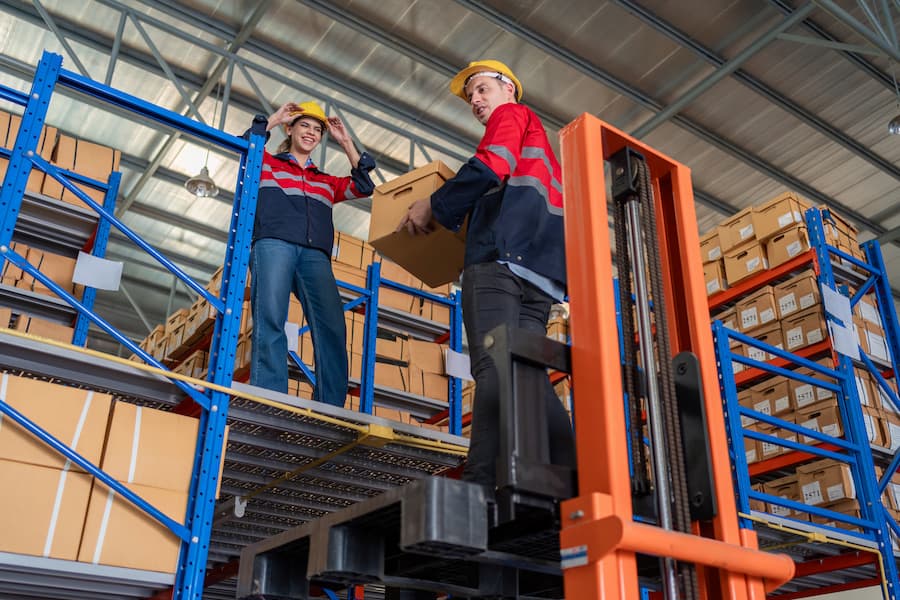
On an order picker, the operator’s control is part of the load carriage and lifts with it. The person rises with the forks. WHSQ notes these machines are generally called stock pickers, and that they can be fitted with a platform extension for use in furniture warehouses, or configured as a turret truck for narrow aisle work.
That is the whole test. Not the height, not the aisle width, not the brand of machine. If the operator’s platform goes up, it is LO.
The reason it is a separate licence is that the risk profile is different. An operator working at height on a moving platform is managing hazards that a seated operator is not, and the training and assessment reflect that.
Neither Licence Covers the Other
This is the part worth being clear about.
WHSQ states directly that the LF class does not include order-picking forklift trucks. It runs the other way too. An LO ticket does not authorise someone to operate a standard counterbalance forklift.
So an operator with fifteen years on counterbalance machines and a current LF licence is not licensed to run your order picker. Not because their experience is doubtful, but because the licence classes are drawn that way. The same applies in reverse to a picker operator asked to move pallets on a counterbalance.
Plenty of operators hold both. But that is something to confirm rather than assume, and it is the sort of thing that surfaces late if the job order only ever said forklift licence.
Where the Equipment Names Get Confusing
The licence definitions are clear enough on paper. The trouble starts when you match them against what the equipment is actually called on site, because the trade names people use every day do not line up neatly with the two classes.
Reach Trucks and High Reach Sit Under LF
This one catches people out because the word reach suggests something specialised.
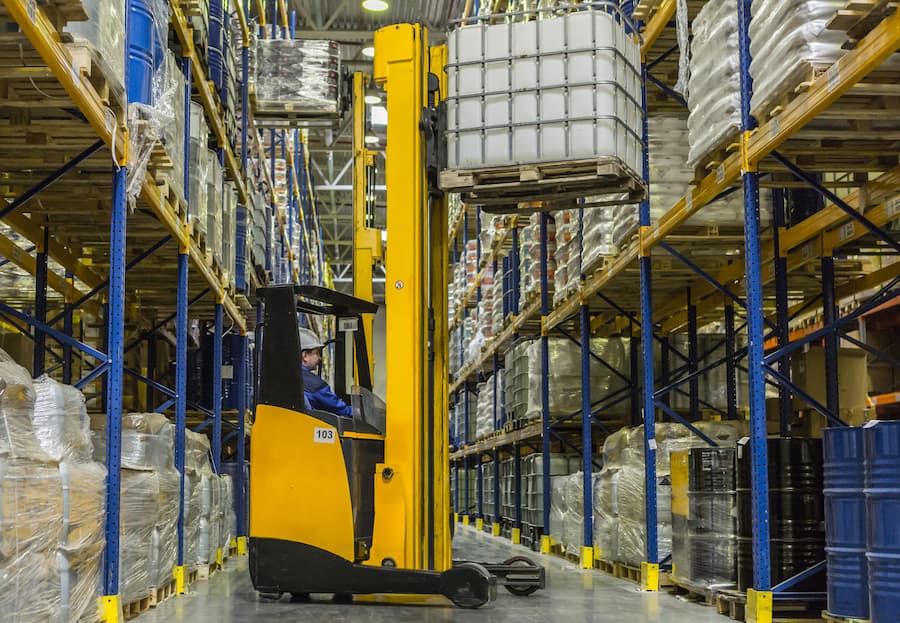
On a reach truck, the mast extends forward to place or retrieve a pallet in racking, and on a high reach machine it does so at considerable height. What does not happen is the operator going up with it. They stay in the cab at ground level, looking upward, often with a camera feeding a screen so they can see what the forks are doing at the top of the rack.
Operator stays put, so it is LF.
Worth noting that the licence and the capability are different questions here. An operator with a current LF ticket is legally cleared to run a high reach machine, but placing a pallet accurately at ten metres is a genuinely different skill from moving one across a loading dock. That is a screening question rather than a licensing one, and it is why job orders should ask for demonstrated hours on the specific equipment rather than stopping at the licence class.
Turret Trucks Sit Under LO
Turret trucks are the clearest example of a machine whose name gives you no clue about its licence class.
They are used in very narrow aisle warehousing, where conventional forklifts cannot turn. The forks rotate rather than the machine, and the operator’s cab travels vertically up the mast with the load. WHSQ names turret trucks explicitly in its description of the LO class for exactly that reason.
So a narrow aisle operation running turret trucks needs LO operators, and a job order asking for a forklift licence will attract LF holders who cannot legally run the equipment. If your site uses turret or man-up machines, that needs to be on the order in those words. Recruiters supplying logistics staff into narrow aisle facilities should be asking about it before they present anyone, though it is faster to state it upfront than to rely on the question being asked.
What Needs No Licence At All
The exclusions inside the LF definition matter commercially, and they are easy to miss.
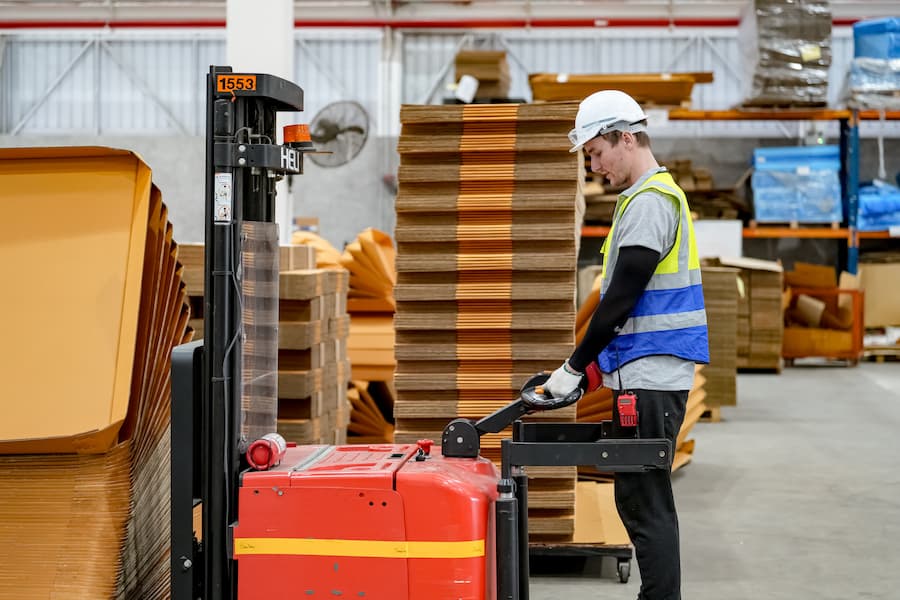
Pedestrian-operated trucks and pallet trucks are excluded outright. That covers electric pallet jacks, walkie stackers and similar equipment where the operator walks alongside or behind rather than riding. No high risk work licence is required to operate them.
This is worth checking against your own job orders. Requiring a forklift licence for work that only involves pallet jacks removes a large group of otherwise capable candidates from consideration, and in a market where licensed operators are scarce, that is a self-inflicted constraint. It is one of the quieter contributors to why warehouse roles staying open longer than employers expect.
None of which means training is optional. No licence requirement is not the same as no competency requirement, and the duty to ensure workers are trained for the plant they operate applies regardless of whether a licence class exists for it.
What an LF Ticket Does Not Extend To
An LF licence authorises the operation of forklift trucks. It does not extend to other plant simply because that plant has forks attached or can be fitted with them.
Telehandlers and front-end loaders running fork attachments are the common examples. They look forklift-adjacent on a busy site, but they are different machines with different stability characteristics, different load charts and different operating risks. They sit under their own licensing arrangements.
If your site runs mixed plant, the job order needs to name each machine type rather than assuming one ticket covers the yard.
Writing the Job Order
Writing the Job Order
Everything above only matters at the point where you write down what you need. Most of the friction in forklift hiring traces back to a job order that was accurate but incomplete.
Specify the Equipment, Not the Category
“Forklift licence required” tells a recruiter almost nothing. It rules out unlicensed candidates and stops there.
The version that works names the machine. Counterbalance, reach, high reach, order picker, turret. If you run more than one, say which ones the person will actually be on and roughly what proportion of the shift each takes. An operator who spends most of the day on a counterbalance and an hour on a picker is a different requirement from one working narrow aisle all shift, and only one of those needs LO.
Include the load type and the environment while you are at it. Palletised goods in a dry store, drums in a chemical facility and timber lengths in a yard all handle differently, and an operator with the right ticket and the wrong background is still a slow start.
Cold storage deserves its own mention. Operators who have worked in chiller or freezer environments are a much smaller group, and a job order that leaves that detail out will produce candidates who withdraw once they hear it.
When You Need Both Classes
Some sites genuinely need dual-ticketed operators. Others think they do and are paying for flexibility they never use.
Worth asking honestly: does this role require someone to run both machine types, or does the site simply own both? If the picker gets used for two hours a week and someone else on the shift is already LO licensed, insisting on dual tickets narrows a candidate pool that was already tight.
Where you do need both, expect it to take longer. Dual-ticketed operators are a subset of an already limited group, and they know it. That is a case for starting the search earlier or for covering the gap through labour hire while a permanent search runs in parallel, rather than leaving the shift short and hoping the right person turns up quickly.
Verifying a Licence
Licences are checkable. WHSQ maintains a high risk work online register, and a licence card should show the classes held and an expiry date.
Two things worth doing. Confirm the class on the card matches the equipment on your floor, since a card showing LF only is not a card that covers your order picker. And check the expiry, because high risk work licences run five years and an operator who has been in the same role for a while may not have thought about theirs recently.
If you are using an agency, ask how licences are verified before candidates are presented rather than assuming it happens. Any provider placing ticketed operators should be checking the class and the expiry as standard, and be able to tell you so without hesitating.
For candidates researching the pathway themselves, our guide to forklift jobs in Brisbane covers how licences are obtained and what employers screen for.
Sources
WorkSafe Queensland: Forklift truck high risk work licence (LF and LO)
LF and LO at a Glance
| LF | LO | |
|---|---|---|
| Licence name | Forklift truck | Order-picking forklift truck |
| Operator position | Stays at ground level | Rises with the load |
| Common machines | Counterbalance, reach truck, high reach | Order picker, stock picker, turret truck |
| Typical use | Loading docks, general warehousing, yard work | Narrow aisle picking, high-bay racking |
| Not covered | Order pickers, turret trucks | Counterbalance and reach trucks |
Both classes are issued by Workplace Health and Safety Queensland, recognised in every state and territory, and valid for five years.
About the Author
Youngbrook Team
Insights, advice, and industry updates from the Youngbrook Recruitment team, covering hiring, compliance, and workforce trends across Australia.
Hiring Licensed Forklift Operators in Brisbane
Getting the licence class right on the job order is the difference between a shortlist you can use and a week of interviews that go nowhere. Tell us the equipment, the shift and the site, and we will come back with operators whose tickets and experience actually match the floor they are walking onto.
Call us directly: 07 3399 6899
Office hours: Monday to Friday, 7am to 6pm
Latest Resources
Hiring Warehouse Staff in Brisbane: Which Role You Need
Storeperson, pick packer or inventory controller? They are not interchangeable, and hiring the wrong one costs you weeks. Here is what each warehouse role actually does, and how to work out which one your operation needs.
Youngbrook Team
How to Classify Machine, Production and Process Workers
The Manufacturing Award classifies on training and supervision, not job titles. Machine operation alone spans three wage groups, and the gap costs money in both directions.
Youngbrook Team

Payday Super: What Labour Hire Users Need
From 1 July 2026, super must be paid every payday, not quarterly. Here's what Brisbane employers using labour hire need to check on liability, cash flow and provider readiness before the deadline.
Youngbrook Team