Employers ResourcesReading time: 11 minutes
Warehouse Recruitment Brisbane: Why Roles Stay Open
Warehouse recruitment in Brisbane is becoming harder as forklift shortages, shift patterns, transport access and candidate competition continue to affect hiring timelines. This guide explains why warehouse roles stay open longer than expected and what employers can do to improve hiring outcomes.
Written byYoungbrook Team
Published Date
Introduction
A warehouse role goes live on a Monday. The pay is fair. The location is established. The manager has used the same ad format before and it has always worked. By Friday, there have been twelve applications. Four people came in for interviews. Two were offered the role. Neither showed up on their start date.
This is not an unusual sequence. It plays out regularly across Brisbane’s logistics and distribution corridors, and most employers are not entirely sure why.
The instinct is usually to blame the ad, or the pay rate, or the broader labour market. Sometimes those are contributing factors. But the reasons warehouse roles stay open longer than they should are usually more specific than that — and more operational.
They sit in the details of the role itself: where the facility is, what shift it involves, what licences are required, how long it takes to get someone started, and what the first week looks like once they arrive.
This article works through those factors directly. It is aimed at employers and hiring managers who are already doing the basics and still finding warehouse recruitment harder than it should be.
Brisbane's Warehouse Workforce Is Thinner Than It Looks
The headline employment figures for South East Queensland can give a misleading impression of how much labour is actually available for warehouse and logistics roles at any given time.
The active candidate pool — people who are available, appropriately experienced, and genuinely open to a new role right now — is considerably smaller than the broader workforce data suggests. A significant portion of experienced warehouse operators are already placed, either in permanent roles or in ongoing labour hire arrangements.
Others are between short-term contracts and available in theory, but not actively looking. The people who are genuinely on the market are often receiving multiple approaches at the same time.
This dynamic creates competition that is easy to miss if you are only looking at your own pipeline. An employer posting a single role may feel like they are competing against a wide labour market. In practice, they are often competing against three or four other employers for a narrow group of available candidates — and the first employer to move quickly tends to win.
The problem compounds in specialised areas of warehouse work, which brings us to the most consistent bottleneck in Brisbane warehouse recruitment.

The Forklift Licence Bottleneck
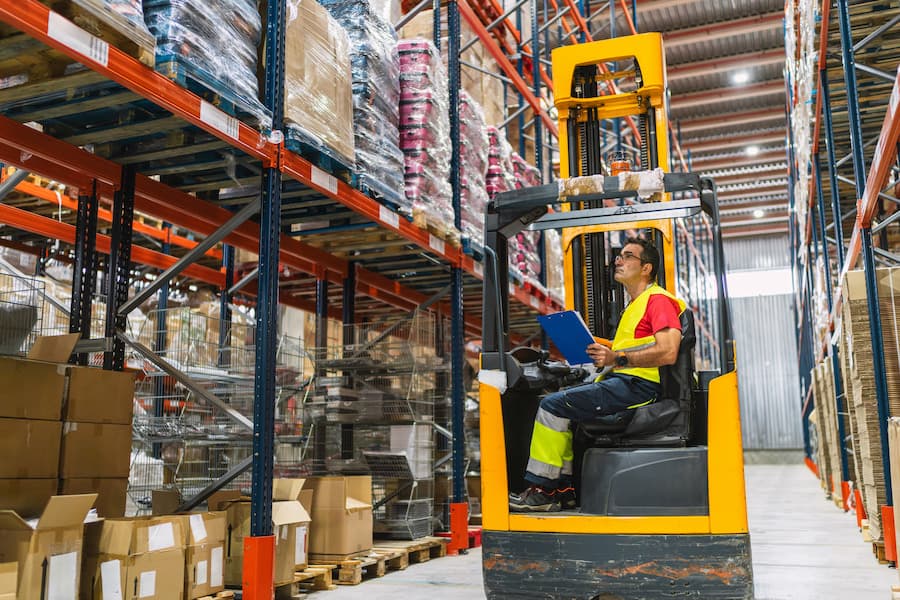
Of all the factors that slow down warehouse hiring, the shortage of licensed forklift operators is probably the one employers underestimate most.
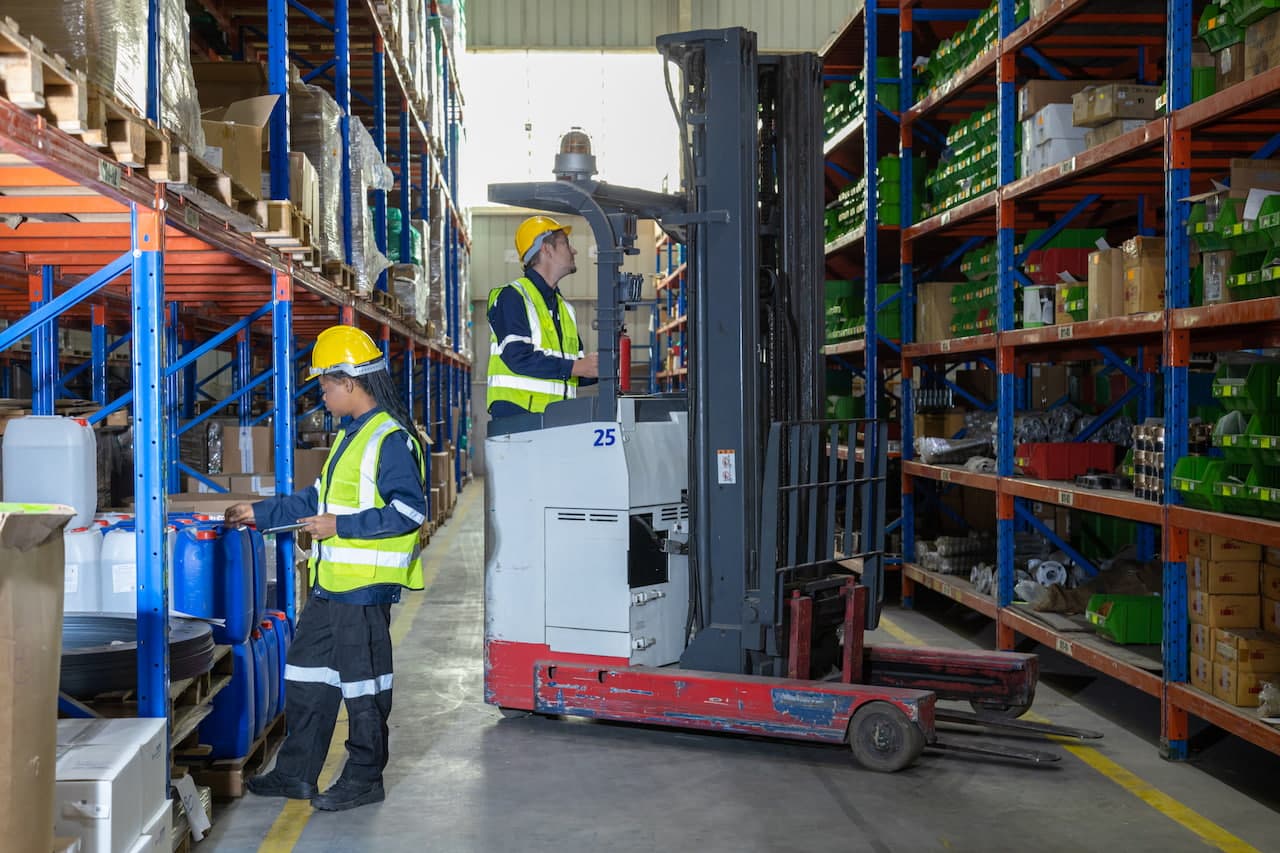
When a role requires an LF forklift licence, the available candidate pool shrinks immediately and substantially. Licensed operators are in demand across every industrial precinct in Brisbane, from Acacia Ridge to Eagle Farm to Brendale, and many of the good ones are already working. The ones who are available tend to know their value and have options.
Employers who post a forklift role expecting a volume of applications often find the response is thin, slow, or made up of candidates whose licences are not current, whose experience does not match the equipment on site, or who are testing the market without serious intent to move.
The pipeline does not replenish quickly. Gaining an LF licence requires a training course, a practical assessment, and licence processing time. It is not something a willing candidate can do in a week to become eligible for an urgent vacancy. And for employers who need someone with reach truck or high-reach experience on top of the standard LF licence, the available pool narrows again.
The practical consequence is that forklift operator roles in Brisbane regularly take two to four weeks to fill, even when the pay is competitive. If the role is on an afternoon or night shift, that timeline extends further.
Location and Transport Access Matter More Than Employers Realise
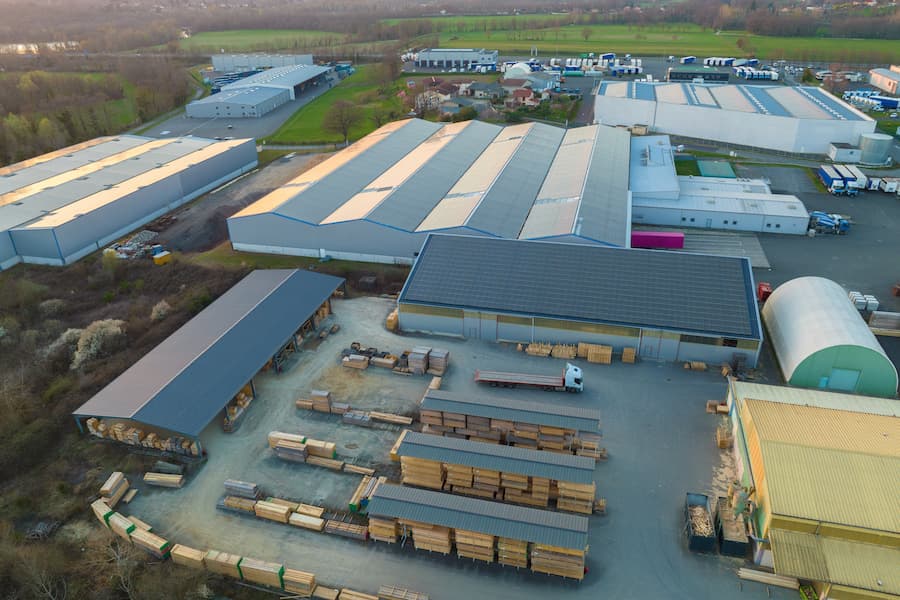
Brisbane’s major warehouse and logistics activity is concentrated in a set of industrial precincts that share a common characteristic: they are difficult to reach without a car. Wacol, Richlands, Acacia Ridge, Coopers Plains, Lytton, Eagle Farm, Brendale. These are the corridors where distribution centres, freight terminals and manufacturing facilities are clustered. Public transport to most of them is either infrequent, indirect, or absent entirely.
This has a direct effect on who can realistically apply for a given role. Candidates without reliable private transport will often self-screen out before the application stage. They are not appearing in the pipeline because they already know the job is not viable for them. It’s not because they lack interest or capability.
Even candidates with cars are increasingly doing the maths before they commit. Fuel costs, toll costs, and travel time all factor into whether a role makes financial sense, particularly for workers who are weighing up two similar offers. A warehouse role that pays the same as a competitor’s facility but requires an extra 20 minutes of driving each way is a less attractive proposition than it was a few years ago.
The realistic catchment area for a given facility is often significantly smaller than employers assume when they post an ad nationally or across all of Brisbane. The candidate needs to be able to get there reliably, five days a week, at whatever time the shift starts. That constraint rules out more applicants than most hiring managers factor in.
Afternoon and Night Shift Drop-Off Is Real
Shift timing is one of the most consistent and least-discussed reasons warehouse roles stay open longer than expected.
Day shift roles, which typically start between 6am and 8am, attract meaningfully more applicants than equivalent afternoon or night shift roles. The gap is not minor. For some roles in some locations, the difference in application volume between a day shift and an afternoon shift equivalent is large enough to double or triple the time-to-fill.
The reasons are structural rather than attitudinal. Workers with children in school cannot take a role that ends at midnight. Workers with second jobs or study commitments have limited availability outside standard hours. Workers who rely on public transport may have no way to get home at 11pm from an industrial estate that buses stopped serving at 7pm.
Working holiday makers tend to sit outside most of these constraints, which makes them a practical option for afternoon and night shifts, and Youngbrook can place them under a labour hire arrangement with work rights and payroll handled.
The afternoon shift drop-off also shows up in a different way: candidates who apply, interview, and accept an afternoon shift role, and then withdraw before starting once the reality of the hours sinks in. The shift was disclosed in the ad. But arriving home at midnight, leaving again before 3pm the next day and trying to maintain a social life around split sleep schedules registers very differently once the start date actually approaches.
If afternoon or night shift roles are consistently taking longer to fill than day shift equivalents, the market is usually signalling something about the shift allowance. The pay rate that fills a day shift role will often not fill the same role on afternoons.

Candidate Ghosting and Late Withdrawals
Employers in warehouse recruitment encounter this regularly: a candidate confirms the role, completes the induction paperwork, is rostered for their first shift, and does not appear. In some cases, they stop responding to messages altogether.
This is frustrating, but it is more predictable than it feels in the moment. Warehouse candidates in a reasonably active job market are often running multiple applications simultaneously. They are not exclusively committed to any one employer until they have actually started working. The candidate who accepted your role on Tuesday may have received a faster offer from another employer on Thursday. The offer they accepted first is not necessarily the one they will show up for.
The gap between offer and start date is where most of this attrition happens. Every day that passes between a candidate accepting a role and their first shift is a day in which another employer can pull them away. Long pre-employment processes include multiple sign-off stages, mandatory medicals, police checks, online induction and modules that have to be completed before showing up. This add days to that gap, and each day adds risk.
This does not mean pre-employment requirements should be stripped out where they are genuinely necessary. But it is worth auditing the process and asking which steps are adding compliance value and which are adding delay without proportionate benefit.

Why Warehouse Job Ads Underperform
Most warehouse job ads are written to satisfy an internal process rather than to attract a candidate. The result is an ad that is accurate but uninviting — a list of requirements and responsibilities that tells the reader what the employer needs, without telling them much about what they would actually be walking into.
Candidates reading warehouse job ads want to know a small number of things quickly: exactly where the job is, what the hours are, whether experience or licences are required or preferred, roughly what it pays, and whether the environment sounds like somewhere reasonable to spend forty hours a week. Ads that leave any of those questions unanswered create uncertainty, and uncertain candidates move on.
Salary or pay rate omissions are particularly costly. In a market where candidates have options, an ad that does not state the pay rate is often skipped in favour of one that does. The candidate does not call to ask and they simply apply elsewhere.
Long application processes compound this. Any warehouse job ad that requires candidates to create an account, fill in a multi-page form, and upload documentation before anyone has even spoken to them will lose a significant portion of otherwise interested candidates at the application stage. The effort-to-reward ratio does not make sense for a candidate who has five other ads open in their browser.
Ads also lose momentum if they are not followed up quickly. A candidate who submits an application and hears nothing for four days has often already started elsewhere.
Absenteeism and the Retention Gap
Filling a warehouse role and keeping someone in it are two separate problems, and in high-turnover environments they can feed each other. Every time a role turns over in the first thirty to ninety days, the hiring process starts again. This usually creates more time pressure than the previous round and managers carry the additional load of the vacancy.
Physical roles have higher early attrition than desk-based work, and that attrition is often connected to mismatched expectations rather than unwillingness to do the job. A candidate who was told the role involved “some heavy lifting” and turns out to be moving 25kg cartons for eight hours on a concrete floor may not have declined the role if the description had been more specific. They are likely to leave within two weeks because the reality did not match what they pictured.
Onboarding quality in warehouse environments tends to be minimal. A safety induction, a walkthrough of the facility, and a supervisor who checks in occasionally is a common standard. For experienced workers moving between similar environments, that may be sufficient. For new starters, or workers transitioning from different industries, it rarely is. Workers who feel unclear about expectations or unsupported in their first week are significantly more likely to exit early.
Absenteeism patterns, particularly Monday absences, or no-shows after long weekends, are often treated as reliability problems. Sometimes they are. More often they are symptoms of low engagement that started in the first few days of employment and were never addressed.
Much of this comes down to whether anyone owns the first fortnight. Facilities with an experienced warehouse manager running structured onboarding consistently see lower early attrition than those where new starters report to whoever is least busy.

What Employers Can Do Differently
Most of the factors described above are not within an employer’s full control, but several of them are partially addressable through changes to how roles are structured, advertised, and onboarded.
Being specific in job ads costs nothing and consistently improves application quality. Including the exact street address (or suburb), the actual shift start and end time, the pay rate, whether a forklift licence is required or preferred, and a direct contact for questions will produce more relevant applications than a generic ad. Specificity also reduces the number of candidates who accept a role and withdraw when the details become clearer.
Reducing the gap between offer and start is probably the single highest-leverage change for employers experiencing ghosting. Where pre-employment steps can be moved earlier in the process, or where unnecessary steps can be removed, the risk of candidate attrition drops significantly. Getting someone started three days sooner is often more valuable than any additional screening that happens in those three days.
Shift premiums are worth examining honestly. If afternoon roles are consistently taking twice as long to fill as day shift equivalents, the market is telling you something about the rate. The cost of a higher afternoon allowance is usually less than the cost of running the role understaffed for four additional weeks.
Induction quality matters more than most employers account for. A structured first week makes a measurable difference to early attrition. Clear expectations, a specific person to ask questions of and a brief check-in at the end of the first few days. The effort is minimal. The impact is not.
For roles that are persistently difficult to fill, or where consistent coverage is needed while permanent recruitment continues, temporary staffing and labour hire arrangements can stabilise operations without locking in permanent headcount prematurely.

When It Makes Sense to Use a Recruitment Agency for Warehouse Roles
Some employers manage warehouse recruitment entirely in-house, and for businesses with predictable volume and accessible candidate pools, that works well.
It works less well in a few specific situations. High-turnover roles like pick packers and storepersons require constant re-recruitment and consume HR time in a way that compounds quickly. Afternoon and night shift roles with consistently low applicant volume require more active sourcing than a job board post typically delivers. Roles requiring specific licences, particularly forklift, sit within a narrow candidate pool that benefits from an agency with existing relationships rather than waiting for inbound applications.
Location is also a factor. Facilities in industrial precincts with poor transport access need targeted sourcing. This approach reaches candidates who already know the area and have the means to get there. A job board post visible to all of Brisbane will attract applicants from postcodes that are not viable, adding noise to the process without improving outcomes.
None of this requires a permanent arrangement. Agencies that specialise in supply chain and logistics recruitment can be used selectively. While a permanent hire is processed in parallel, temporary solutions can be applied to hard-to-fill shifts, for volume surges, or to provide coverage.
Conclusion
Warehouse hiring in Brisbane is not going to become straightforward in the near term. The factors driving slow fill times, such as geography, licensing constraints, shift patterns, and candidate behaviour, are structural. They do not resolve by refreshing the same job ad.
Understanding what is actually causing the delay is where the fix starts. In most cases it is not one thing but a combination of two or three factors that compound each other. Identifying which ones are at play in your operation is the first step toward reducing time-to-fill in a way that holds.
About the Author
Youngbrook Team
Insights, advice, and industry updates from the Youngbrook Recruitment team, covering hiring, compliance, and workforce trends across Australia.
Need Warehouse Staff in Brisbane?
We support Brisbane businesses with warehouse, logistics and industrial recruitment across temporary staffing, labour hire and permanent hiring.
Submit an enquiry and we’ll come back to you with a practical recommendation based on your workload, shift structure and hiring requirements. If you prefer to speak with someone directly, call us on (07) 3399 6899 Monday to Friday, 7am to 6pm.
Latest Resources

Hiring Warehouse Staff in Brisbane: Which Role You Need
Storeperson, pick packer or inventory controller? They are not interchangeable, and hiring the wrong one costs you weeks. Here is what each warehouse role actually does, and how to work out which one your operation needs.
Youngbrook Team
Forklift Licence Classes: LF vs LO for Employers
Queensland has two forklift licence classes and they do not cover each other. What LF and LO each authorise, and what to put on your next job order.
Youngbrook Team
How to Classify Machine, Production and Process Workers
The Manufacturing Award classifies on training and supervision, not job titles. Machine operation alone spans three wage groups, and the gap costs money in both directions.
Youngbrook Team